DEMGES activities & Inclusive AI Lab

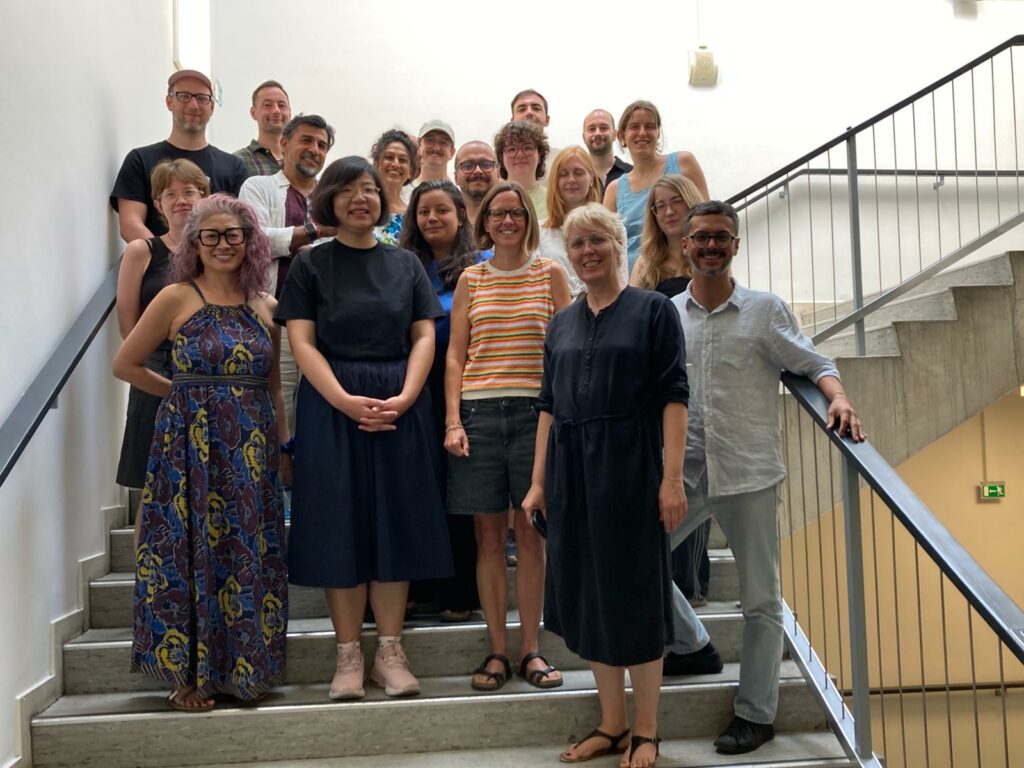
Two weeks ago, we had a fabulous DEMGES (ÖAW Commission Democracy in Digital Societies) workshop with experts from both the academic and the policy world! The main purpose of the workshop was to discuss our concept of digital hybridization that we’ll submit to Politics & Society soon (led by Jensen Sass). A public lecture by Aris Komporozos-Athanasiou from the Center of Capitalism Studies/ London rounded off the inspiring two-day meeting: The price of truth; an interview with Aris can be found on the ÖAW Website (in German). The next steps of the commission are the plannning of the Democracy Labs to be conducted over the next years.

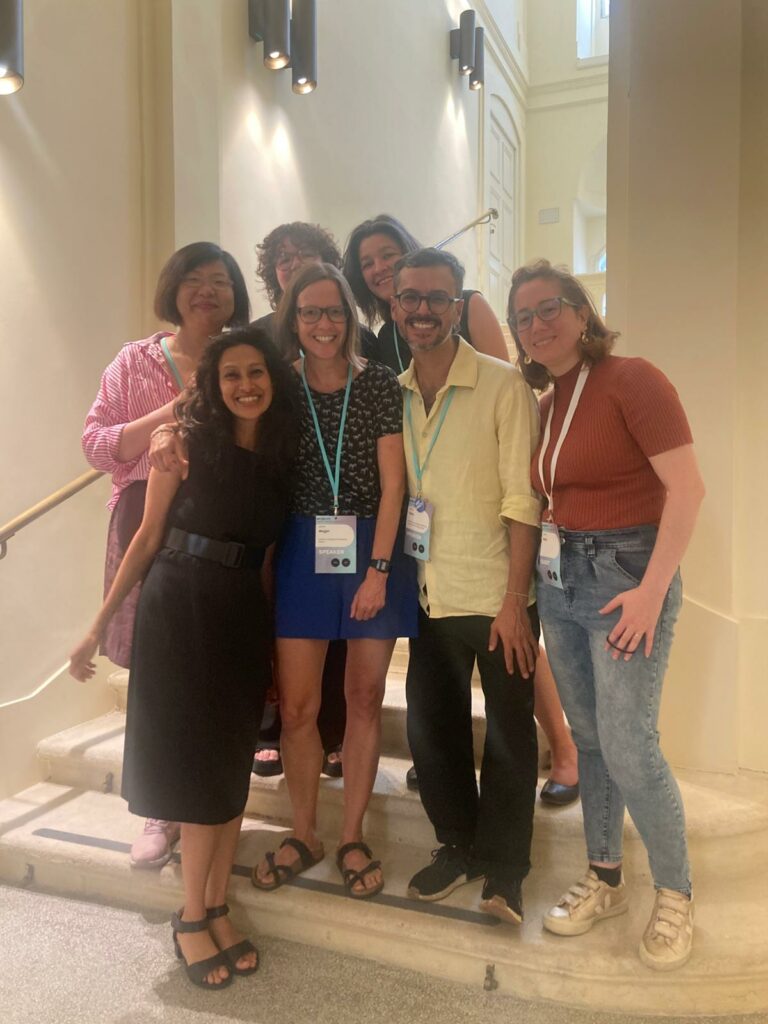
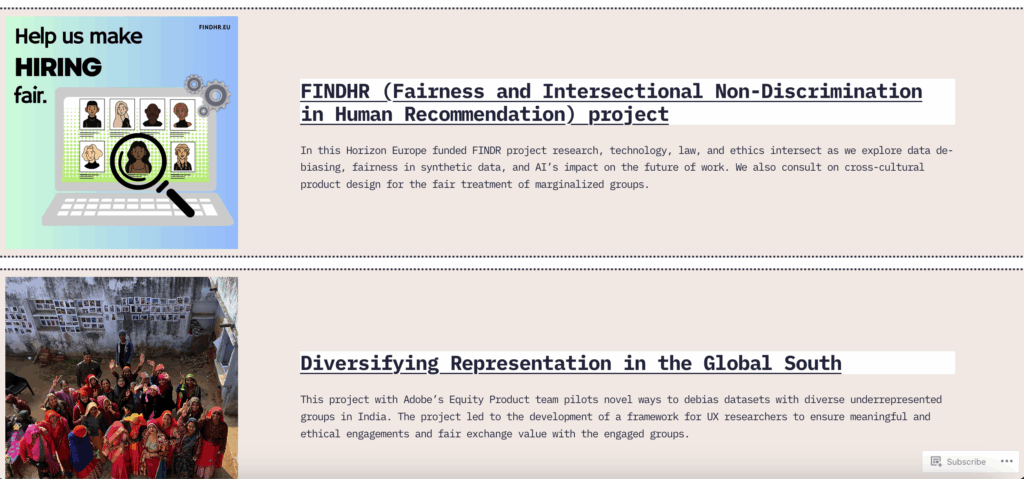
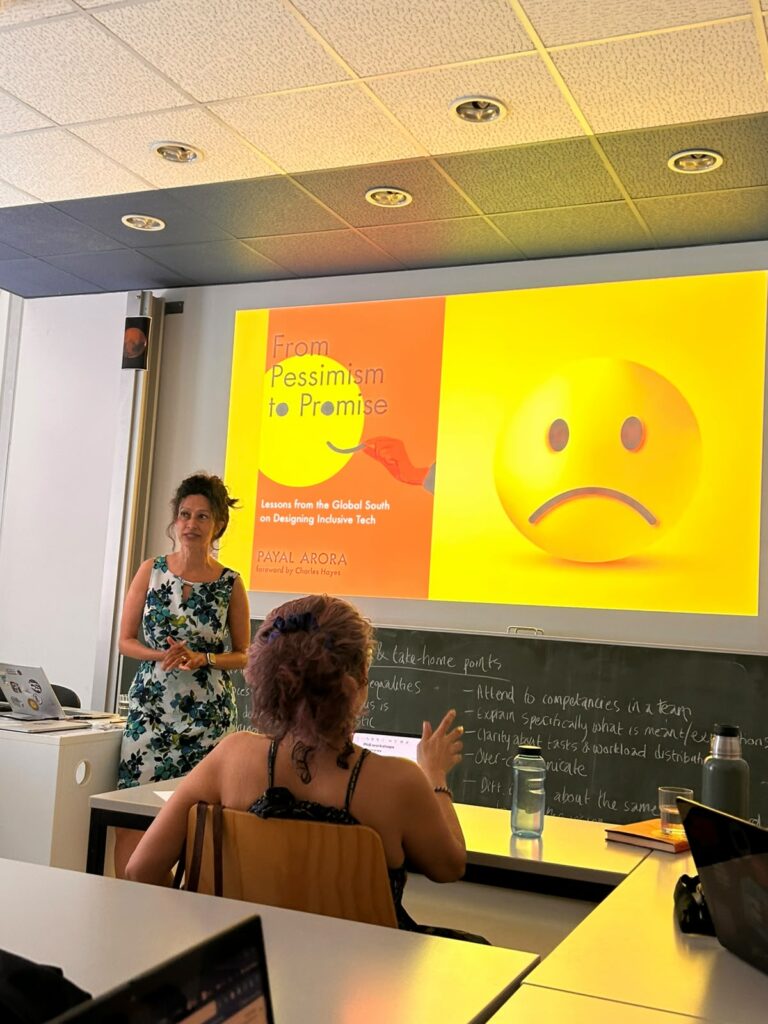
One Democracy Lab will be carried out in synergy with the Inclusive AI Lab in Utrecht, co-led by Payal Arora. The Inclusive AI lab is dedicated to developing more equitable, participatory, and community-led AI systems – with a particular focus on the Global South; or the Majority World. I’m really proud that I’ll be part of this year’s cohort group – together with lots of inspiring academics, developers, NGOs, and practitioners from around the world! Stay tuned, further DEMGES/ Inclusive AI events & activities will be announced soon!

Project Europe is finally out!

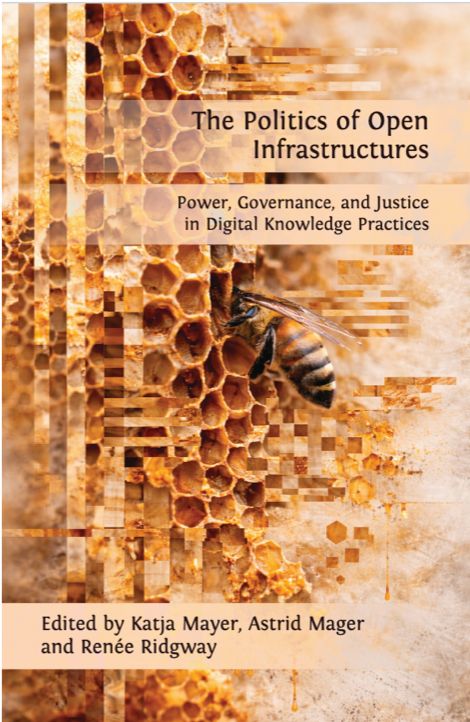
It has taken some time, but now the book Project Europe. The Making of European Digital Innovation, Policy and Society is finally out! The book is co-edited by Luca Marelli, Jim Dratwa, Gert Verschraegen and Ine Van Hoyweghen and comprises an excellent line-up of authors including Barbara Prainsack, Brice Laurent, and Ulrike Felt (just to name some of them). I’m happy that I’ve contributed a chapter on Digital Europe from Below: Alternative routes to the Digital Decade – here’s the link to the table of contents.

You’re at home baby

Letzte Woche war ich zur Abwechslung mal bei Jugendradio! Fein wars!! Mit Dank an Veronika Weidinger für die Einladung! Interview und Podcast zum Nachhören gibts hier:

2


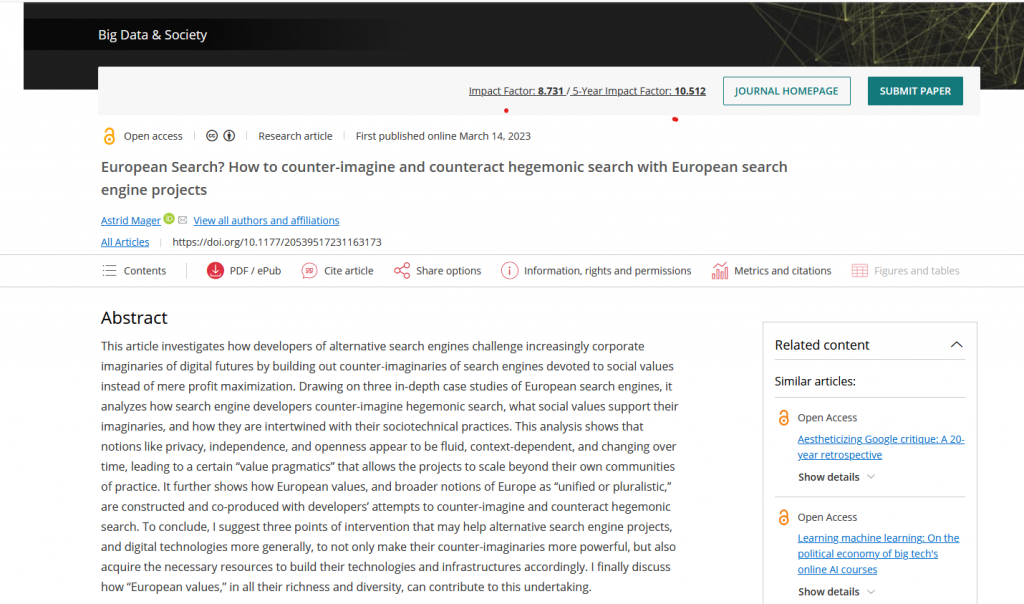
European Search?

I’m very happy that my BD&S special issue article is online now! 🙂 It’s called “European Search? How to counter-imagine and counteract hegemonic search with European search engine projects” – it was a bit of a tough nut since critiquing big tech and their sociotechnical imaginaries appears to be much easier than thinking about (and realizing!) alternative technologies and their counter-imaginaries. And that’s exactly why we need to shift our attention from dominant, often corporate imaginaries towards alternative tech and their counter-imaginaries of digital futures – especially in the European context where notions of value-based Europe are strongly pushed in EU policy rhetoric, but remain empty catchphrases often times. To sum up, I’m proud that this article is out now & I would love to hear what you guys think about it!!

x

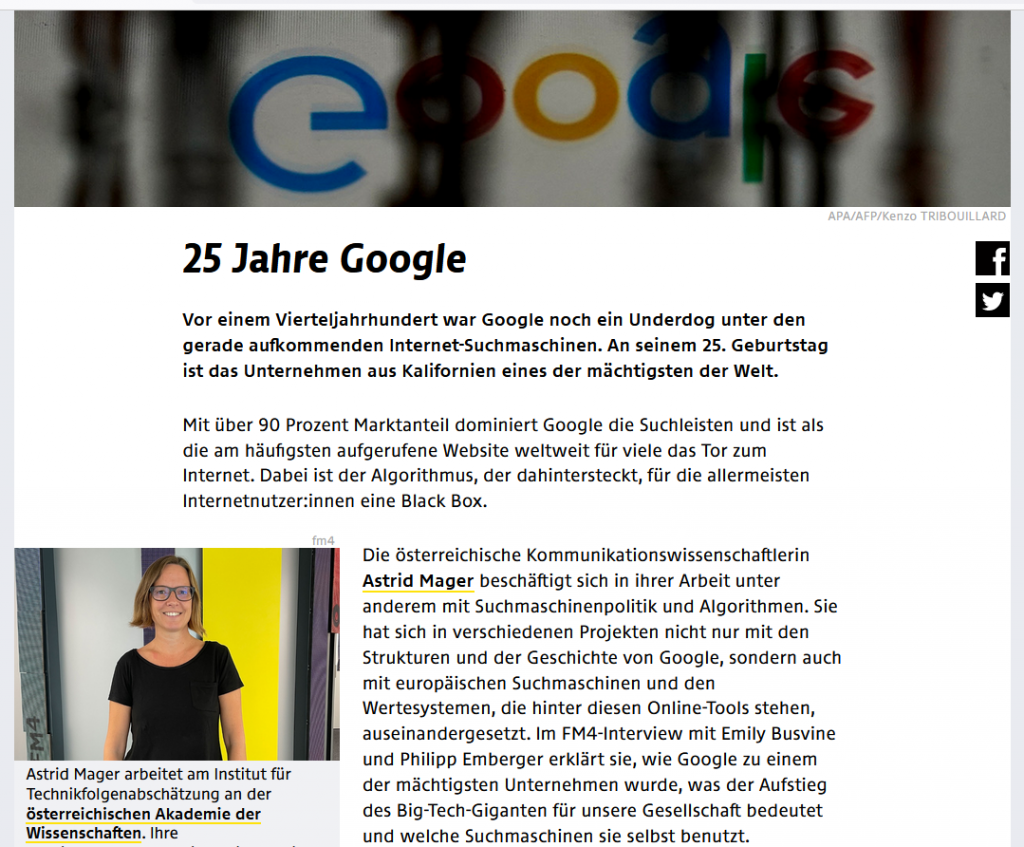
Talk Radio: Machtmittel Suchmaschine

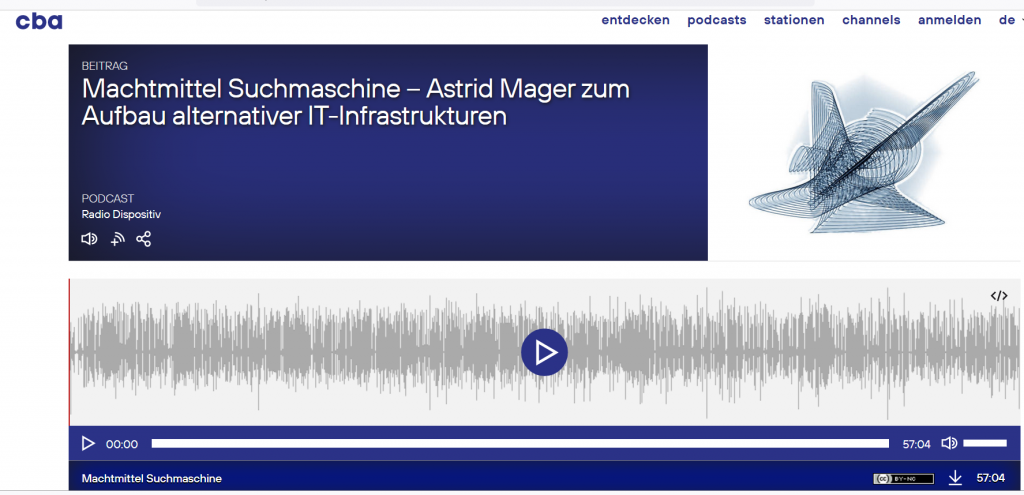
Im Oktober habe ich mal wieder mit Herbert Gnauer über Suchmaschinen diskutiert (Radio Dispositiv auf Orange, 94.0). Genauer über alternative Suchmaschinen, sowie den Aufbau offener – öffentlich finanzierter – IT Infrastrukturen. Ein offener Web Index könnte die Grundlage für die Entwicklung von ganz unterschiedlichen Suchmaschinen, Ranking-Instrumenten, und Applikationen sein. Er könnte dem gegenwärtigen Monopolisten (Google) eine reichhaltige, buntere, diversere Suchmaschinenlandschaft entgegensetzen. Diese würde wesentlich besser zu unseren “europäischen Werten” – und hier insbesondere dem pluralen, multikulturellen, und diversen Europa – passen, als hegemoniale Ansprüche ein “europäisches Google” zu bauen, dem Europa kaum gerecht werden kann – alleine schon deshalb, weil Europa ganz anders funktioniert als die USA (und China) – Stichwort Datenschutz, aber auch kulturelle Eigenheiten, verschiedene Sprachen, fragmentierte Märkte etc, die es positiv nutzbar zu machen gilt! Ein offener Web Index – wie übrigens auch das dezentrale social network Mastodon – halten daher nicht nur alternative, verteilte, nachhaltigere Technologien für uns bereit, sondern auch alternative Imaginationen von Europa, die es weiter zu verfolgen gilt.

Zwei Initiativen machen sich hier insbesondere starkt: Die Open Web Index Initiative und die Open Search Foundation, die beide den Aufbau einens offenen Web Indexes anstreben. Es lohnt sich diese großartigen Projekte im Detail unter die Lupe zu nehmen!

Vielen Dank Herbert, dass Du diesen Ideen Raum in Deiner Sendung geboten hast! Es ist mir immer wieder eine Freude! Spoiler: zwei wiss. Artikel dazu sind gerade im Erscheinen (Big Data & Society) & in Begutachtung (book Project Europe) – more info coming soon!

Link zur Sendung Dispositiv auf Radio Orange 94.0: Machtmittel Suchmaschine – Astrid Mager zum Aufbau alternativer IT-Infrastrukturen

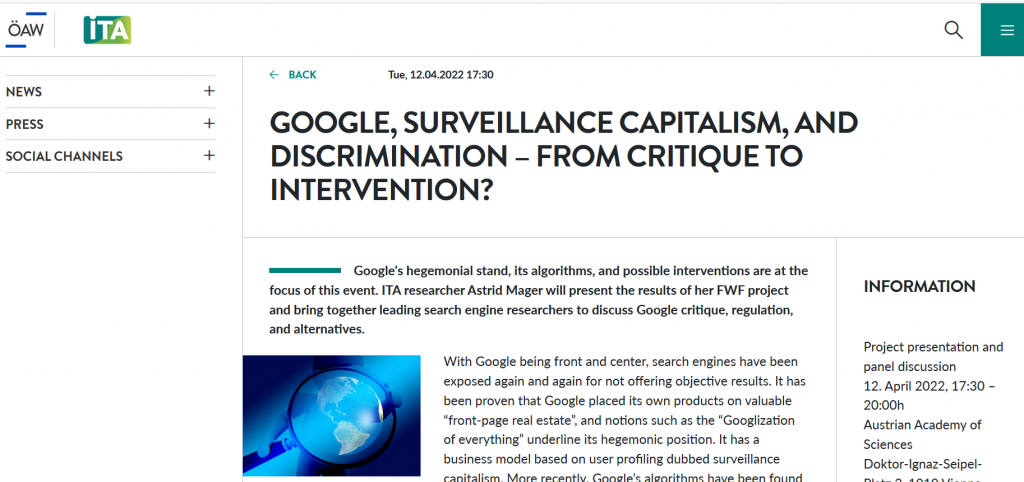
event & panel discussion: google, governance, & possible interventions

On the 12th of April we’ll host a big event at the newly renovated Austrian Academy of Sciences. I’ll first present the results of my long-standing habilitation project “Algorithmic Imaginaries” (funded by the Austrian Science Fund; Elise Richter Program), followed by a panel discussion with leading search engine scholars from all over Europe. Together with Elizabeth Van Couvering, Rosie Graham, and Bernhard Rieder we’ll discuss Google, surveillance capitalism, and discrimination; moderated by Ov Cristian Norocel and Richard Rogers. All infos and registration on-site can be found here; there’ll be a stream too!

googleBefore the public event we’ll be holding a writing workshop at the Institute of Technology Assessment to discuss the manuscripts for our special issue “From Google Critique to Intervention” to be published by Big Data & Society. I’m already looking forward to this get-together!! The video of the event can be found here. aaw

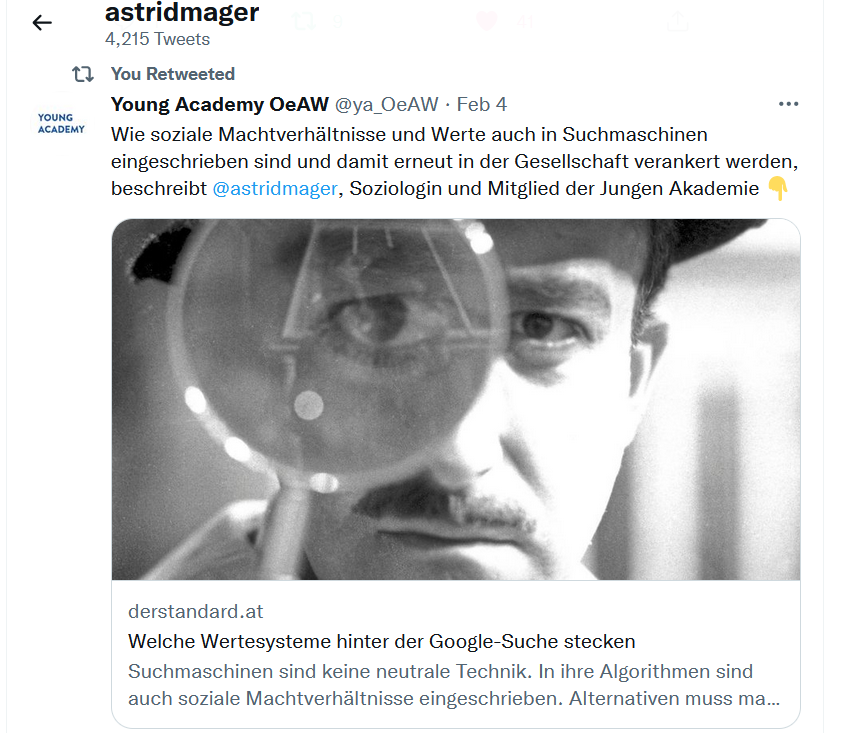
If you’d like to learn more about my project “Algorithmic Imaginaries” you might watch this video of the lecture I gave in Feburary as part of the ÖAW’s gender & diversity lecture series (in German). This lecture sparked quite some media attention including a cover in Der Standard’s “Forschung Spezial” 🙂

stand

conference travels from the past..

In Austria, we’re diving through the “4th Corona wave” right now including a hard lockdown. Yet again, I’m sitting in my home (office) with the kids on my lap in case more than two school kids get infected in the same class. The responsibility has been fully shifted onto teachers, parents, and their kids by now. Politics has given up on the Covid-management of schools, as it seems. In the middle of this chaos, I’m enthusiastically thinking back to my (real!) trip to Lund two months ago. Olof Sundin and Alison Gerber invited me to give a keynote lecture at the interdisciplinary symposium In Search of Search (and its Engines). This workshop was a kind of gathering of pioneering search engine scholars that accompany me since my PhD (more than 15 years now). I finally met Elizabeth van Couvering, for example, whose work on the commercialization of Google and the creation of its business model based on the “traffic commodity” had a great impact on my PhD research. Also, Richard Rogers, Dirk Lewandowski, Jutta Haider, and other great scholars were there and it was FUN! (and not only because of the real food & drinks!) The best part is that we keep the lively debates about search engines, search engine research, and its academic & sociopolitical impact alive. We’re currently working on a special issue for Big Data & Society called The State of Google Critique and Intervention co-edited by Ov Cristian Norocel, Richard Rogers, and myself. We’re planning a workshop and a public event in Vienna (12 April 2022), which I love to organize in the middle of this 4th wave as a possibility to work towards a light at the end of the tunnel.. 😉 So stay tuned!

blogMoreover, almost as an exception to the rule, I attended a great 4S online session this year: Wiring digital justice: Embedding rights in Internet governance by infrastructure organized by Stefania Milan, Niels ten Oever, and Francesca Musiani. Despite the shitty online platform the conference was running on, the session organizers managed to trigger fruitful discussions by providing thoughtful comments after each of the presentations. My paper was titled “Encoding Freedom: Analysis of open search technology between German hacker ethics and Asian start-up culture” and triggered debates about Chinese tech development and the “metrics of freedom” that I’m still thinking about – now that I finally have time to analyze my rich empirical materials on open source communities and other alternative search projects.

Ars Electronica event 2020

Here’s the link to the video documentary of past year’s Ars Electronica event “How to become a high-tech anti-discrimination activist collective” that was co-organized with the Johannes Kepler University in Linz (A). Both my colleague Doris Allhutter and me organized a workshop as part of this bigger event. My workshop was concerned with AI technology and open source alternatives: “How to create your own AI device with SUSI.AI – An Open Source Platform for Conversational Web”. It was a great opportunity to catch up with my co-workshop leader Hong Phuc Dang from SUSI.AI (one of my case studies of my current search engine project; see research). Many thanks to the organizers!! It was fun! 🙂

ARS electronica workshop

xxThis year I have the pleasure to give a workshop together with Hong Phuc Dang as part of the ARS Electronica Festival 2020. The title is How to create your own AI device with SUSI.AI – An Open Source Platform for Conversational Web and its part of an overall event Waltraud Ernst and colleagues from the University of Linz have organized. The whole event is dealing with bias and discrimination in algorithmic systems: “How to become a high-tech anti-discrimination activist collective” with awesome keynotes by Lisa Nakamura and Safiya Noble; more infos can be found on the ARS/ Uni Linz website. There you can also register if you’re interested in participating! I’m already looking forward to this event!!! 🙂

die macht der algorithmen

Radiosendung zum Thema “Die Macht der Algorithmen”. Mit vielem lieben Dank an Herbert Gnauer!! Radio Dispositiv zu hören auf Orange 94.0 @HerbertGnauer