From pessimism to promise

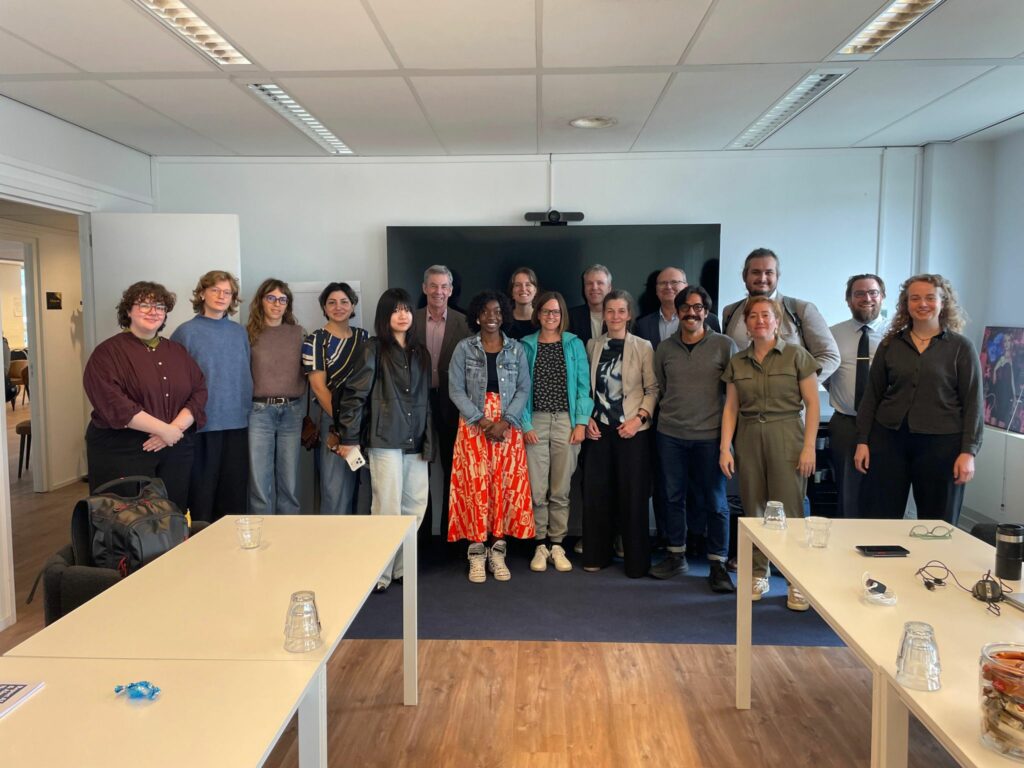
Last week, we had a great gathering organized by the fabulous Inclusive AI Lab, led by Payal Arora. The four-day event was part of the Data Care workshop series and had the motto – and aim – of Reclaiming Tech-Optimism. The Inclusive AI Lab, Utrecht University, follows the main purpose of opening up, diversifying, and reimagining AI together with the Majority world – which was reflected in the diverse set of speakers and audience – ranging from academic scholars, policy advisors, industry, to civil society from all over the world. The colorful exchange consisted of panel discussions, deep-dive workshops, field trips, and lots of interactive parts that made us get to know each other in ways we haven’t experienced so far (especially not in academic contexts) – such as introducing ourselves in ways we haven’t before, asking personal questions or staring in each others’ eyes for 2 (!) min without speaking, or talking to strangers on the street. Having been hesitant at first, I was ultimately surprised by the intimate connections we built and the hopeful vibes that were generated this way.
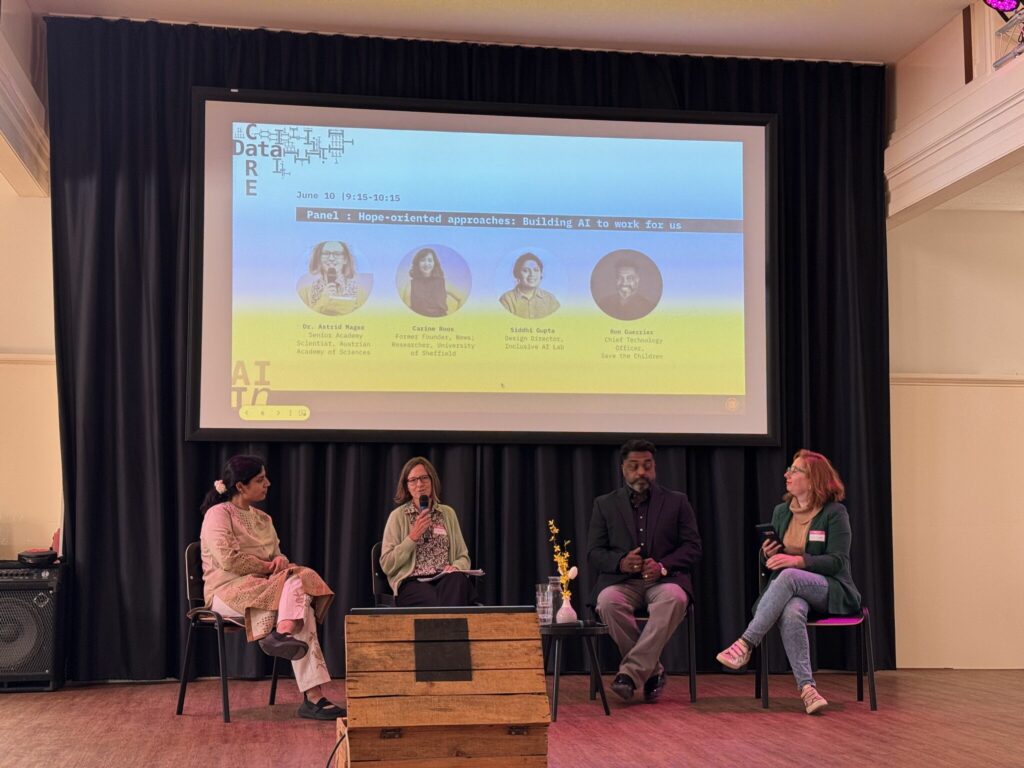
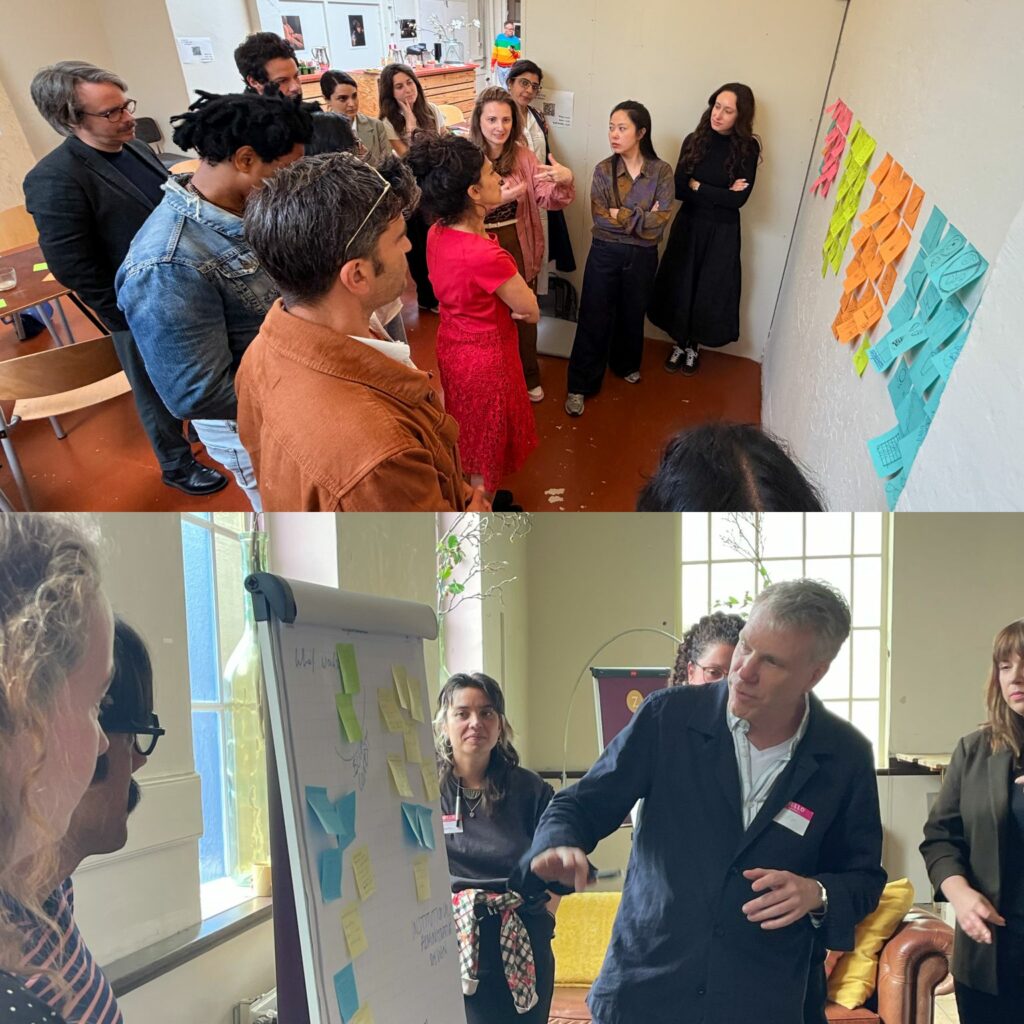
Together with Mirko Tobias Schäfer (Data School, Utrecht Univ.), and the support leads Rana Kuseyri and Constanze Kerres, I organized a workshop on “Situated AI Ethics: How to move from Values to Action” and a field trip to The Hague to visit the Data Protection Authority (DPA) and the Ministry of Labor and Social Affairs to talk about algorithmic systems in welfare states and how the Dutch Government responded to the Childcare Benefits Scandal more particularly (kindly supported by the ÖAW Commission Democracy in Digital Societies). The DPA’s professional and proactive take on algorithmic harm, risk mitigation, and human oversight gives me hope indeed! Two notions that particularly sticked with me were “institutional racism” and “institutional literacy”, which needs to be built on the very top of organizations rather than putting the burden on individuals such as citizens or civil servants. We’re currently collecting and organizing our ideas and planning to write a commentary or opinion piece based on the rich discussions we had – ideally together with some of the workshop participants and their wonderful examples of hopeful AI from different countries, cultures, and institutional contexts.

The spirit of hope – From Pessimism to Promise – will also guide our discussions next week that will take place as part of the Digital Humanism Conference in Vienna. First, Katja Mayer and I have organized a PhD workshop at the STS Department to discuss “Alternative Imaginaries of Social Digital Innovation from the Global South to Europe” together with Payal Arora and Gilberto Vieira from data_labe (Rio de Janeiro), as well as PhD students working on AI, policy, and human oversight in different institutional contexts. Second, we’ve organized a panel discussion with Payal, Gilberto, and Juliane Jarke to discuss how to reimagine and rebuild more inclusive digital futures – in Europe and the Global South(s).
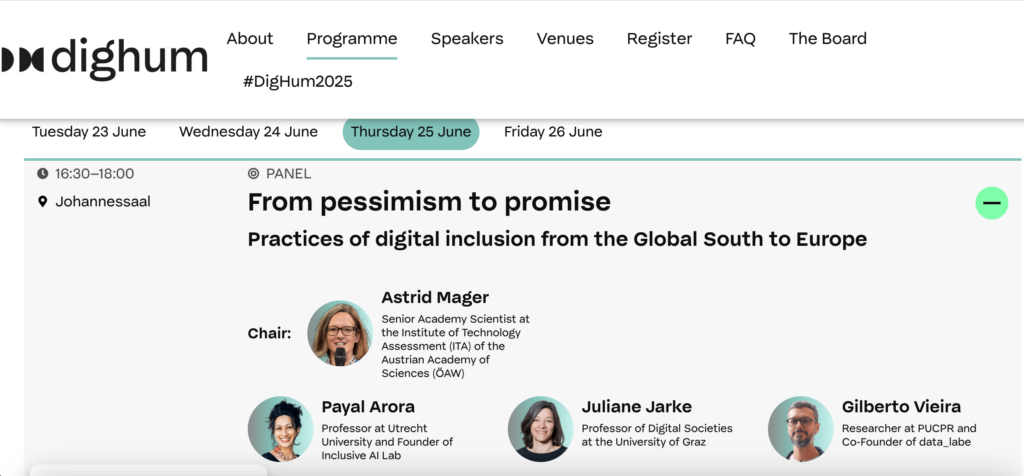
I’m already looking forward to exciting days ahead!

ÖAW initiative: Democracy in Digital Societies

On the 10th of October 2024 we – Barbara Prainsack and me – start a new initiative at the Austrian Academy of Sciences: Democracy in Digital Societies (ÖAW commission).
Besides an internal workshop and the official inauguration, there will be a public event
with a lecture by Sophie in ‘t Veld, former member of the European Parliament, followed by a panel discussion with Ilona Kickbusch, Sonja Puntscher-Riekmann, Barbara Prainsack, and me (moderated by Anna Goldenberg). We’re looking forward to seeing you there!

More information and registration for the event can be found here.

dem

Talk Radio: Machtmittel Suchmaschine

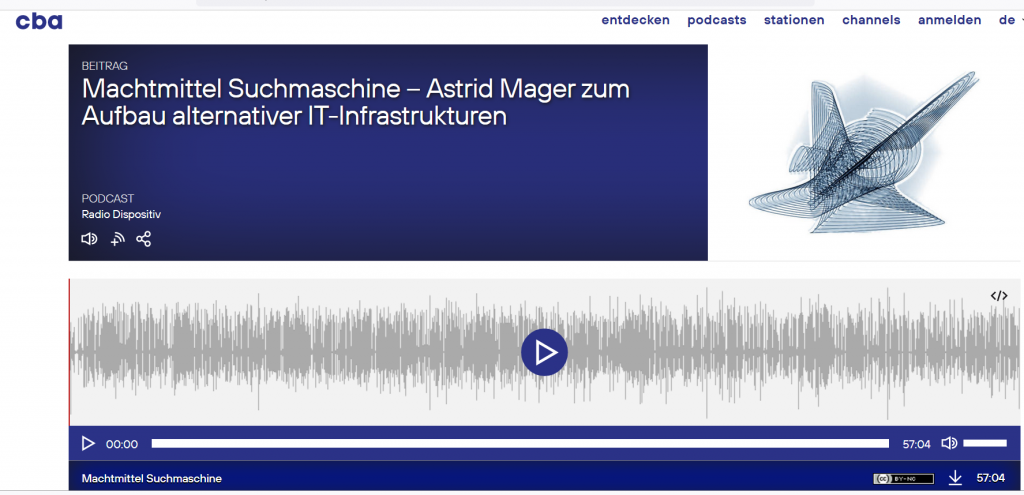
Im Oktober habe ich mal wieder mit Herbert Gnauer über Suchmaschinen diskutiert (Radio Dispositiv auf Orange, 94.0). Genauer über alternative Suchmaschinen, sowie den Aufbau offener – öffentlich finanzierter – IT Infrastrukturen. Ein offener Web Index könnte die Grundlage für die Entwicklung von ganz unterschiedlichen Suchmaschinen, Ranking-Instrumenten, und Applikationen sein. Er könnte dem gegenwärtigen Monopolisten (Google) eine reichhaltige, buntere, diversere Suchmaschinenlandschaft entgegensetzen. Diese würde wesentlich besser zu unseren “europäischen Werten” – und hier insbesondere dem pluralen, multikulturellen, und diversen Europa – passen, als hegemoniale Ansprüche ein “europäisches Google” zu bauen, dem Europa kaum gerecht werden kann – alleine schon deshalb, weil Europa ganz anders funktioniert als die USA (und China) – Stichwort Datenschutz, aber auch kulturelle Eigenheiten, verschiedene Sprachen, fragmentierte Märkte etc, die es positiv nutzbar zu machen gilt! Ein offener Web Index – wie übrigens auch das dezentrale social network Mastodon – halten daher nicht nur alternative, verteilte, nachhaltigere Technologien für uns bereit, sondern auch alternative Imaginationen von Europa, die es weiter zu verfolgen gilt.

Zwei Initiativen machen sich hier insbesondere starkt: Die Open Web Index Initiative und die Open Search Foundation, die beide den Aufbau einens offenen Web Indexes anstreben. Es lohnt sich diese großartigen Projekte im Detail unter die Lupe zu nehmen!

Vielen Dank Herbert, dass Du diesen Ideen Raum in Deiner Sendung geboten hast! Es ist mir immer wieder eine Freude! Spoiler: zwei wiss. Artikel dazu sind gerade im Erscheinen (Big Data & Society) & in Begutachtung (book Project Europe) – more info coming soon!

Link zur Sendung Dispositiv auf Radio Orange 94.0: Machtmittel Suchmaschine – Astrid Mager zum Aufbau alternativer IT-Infrastrukturen


podcast time

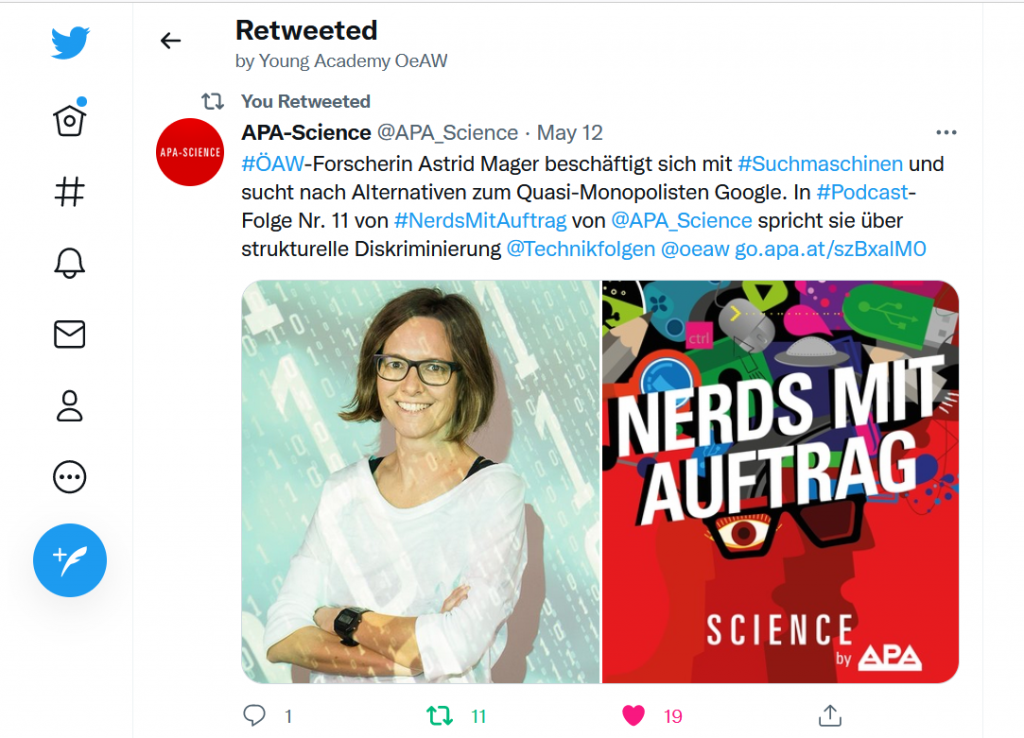
If you’re interested in corporate search engines from the US and alternative search infrastructures from Europe listen to these two podcasts that were produced by the Austrian Press Agency (APA Science, Nerds mit Auftrag) and the Austrian Academy of Sciences (MAKRO MIKRO); both in German. pic

me

panel discussions

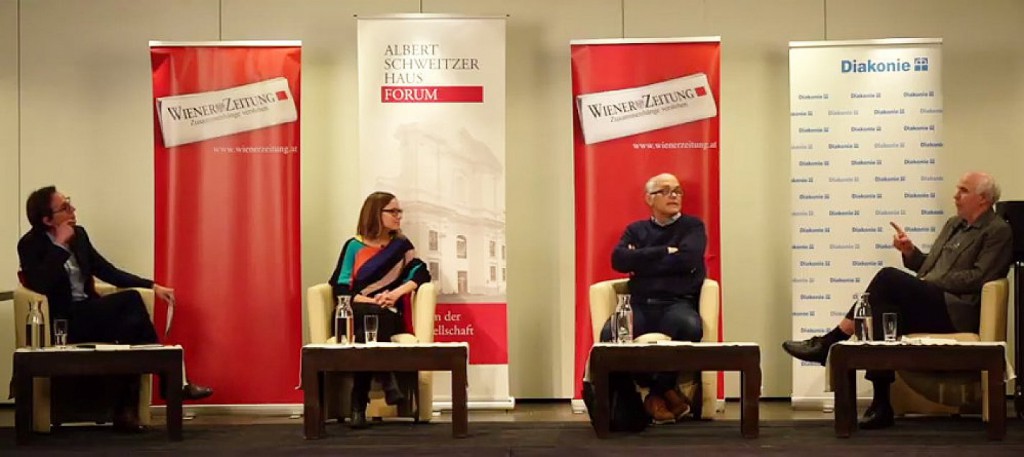
Two panel discussions might be worth mentioning: 1) I participated in this year’s Joint Academy Day of the Austrian Academy of Sciences (organized together with the Canadian Academy of Sciences). Our panel was concerned with the Covid-19 crisis and its social, economic, and policy implications. The video can be watched here. 2) The Austrian newspaper “Wiener Zeitung” organized a panel discussion on the topic of “Algorithms – friend or enemy?”; the link to the video can be found here.

210128-1930-algorithmus-humanismus

die macht der algorithmen

Radiosendung zum Thema “Die Macht der Algorithmen”. Mit vielem lieben Dank an Herbert Gnauer!! Radio Dispositiv zu hören auf Orange 94.0 @HerbertGnauer


“netzpolitischer abend”

meme-evil-toddler-netzpat14Genau vier Wochen nach dem letzten Netzpolitischen Abend AT gibt es am ersten Donnerstag im Monat, konkret dem 2. März, wieder drei spannende Vorträge zu netzpolitischen Themen – wie üblich ab 19:30 Uhr im Wiener Metalab in der Rathausstr. 6:


  • Astrid Mager (Institut für Technikfolgenabschätzung, @astridmager): Suchmaschinen in Europa. Europäische Suchmaschinen?
  • Maximilian Schubert (@ISPA_at): „Netzsperren in Österreich“
  • Wolfie Christl (@WolfieChristl): Big-Data-Business, Profiling & Privacy

C6fm4W3WYAALsrrUnd hier der Link zum Nachsehen und Nachhören. Danke an alle, va Herbert Gnauer (von Idealism Prevails) für’s streamen & schneiden, war sehr fein!!


algorithmic imaginaries & algorithmic regimes

csm_AlgoVis_LupeWelt_01_13c333205fMy new research project “Algorithmic Imaginaries. Visions & values in the shaping of search engines” is online (on the ITA Website)! 🙂 Thanks to Thomas Bayer for his help!

paintby_blck_ju-sm-150x150Further, the short videos on “Algorithmic Regimes” by Felix Stalder & Konrad Becker (World-Information Institute) are online too! The project is called Painted by Numbers, which is a great name I think! All  videos are focusing on algorithmic logics and culture/ politics/ regulation etc. It’s really a great compilation of people and statements on algorithmic power in contemporary society. The videos will be assembled as video installations in art exhibitions. You can watch all of them here.

round table discussion

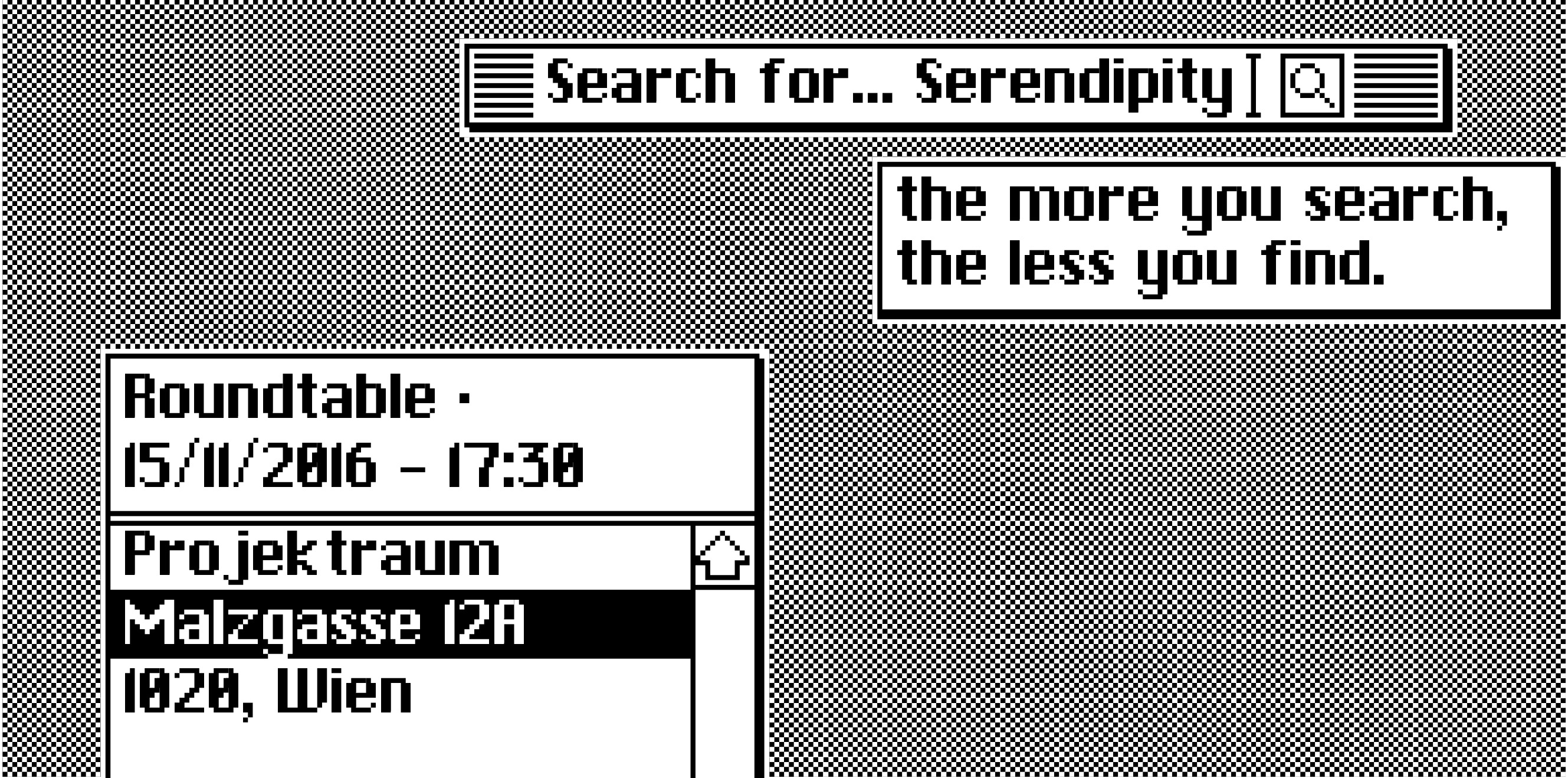
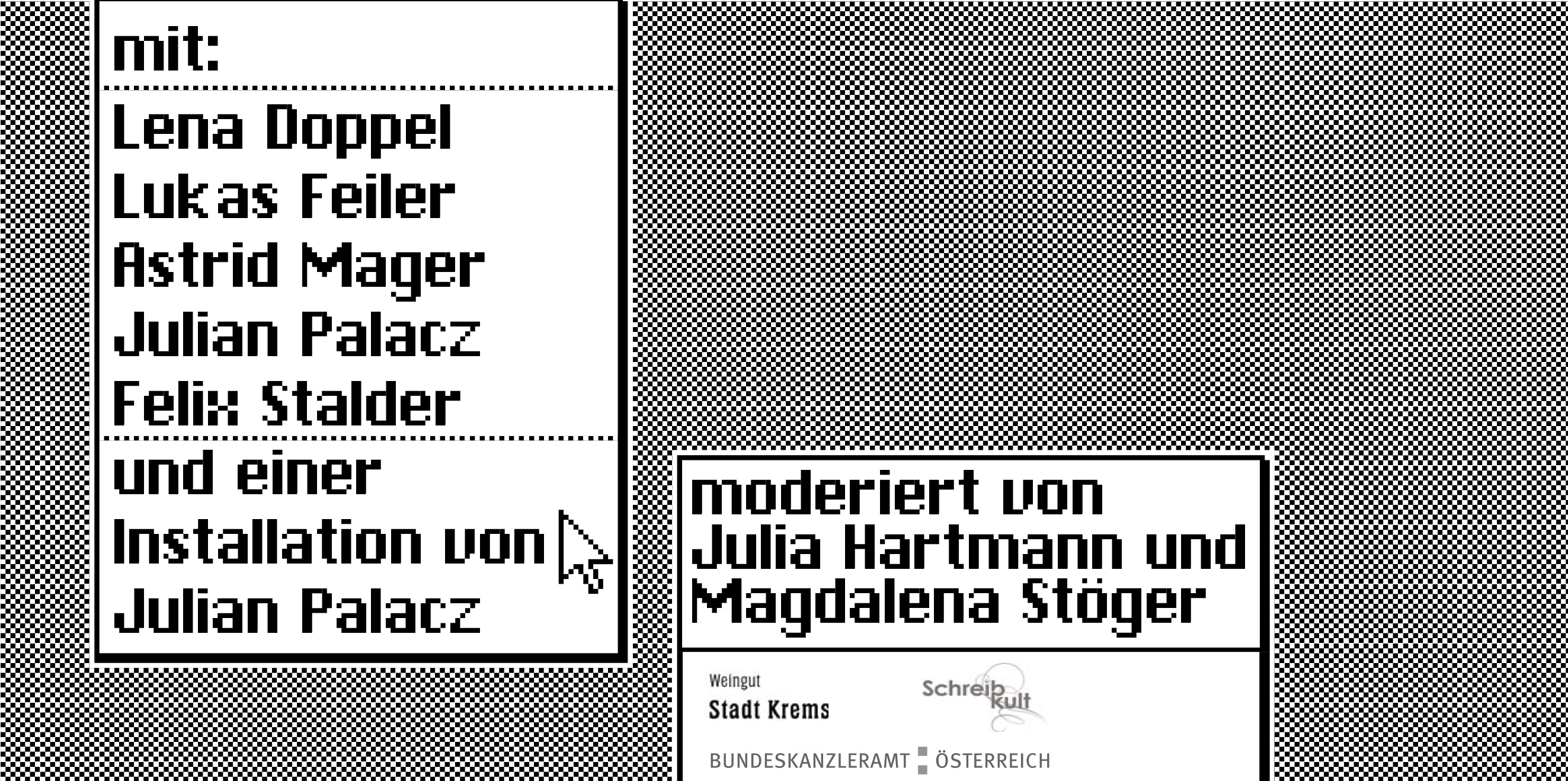
Next Tuesday I’ll be part of a round table discussion on search engines: Search for Serendipity. It’s gonna be related to an art exhibition that will start soon (in St. Pölten). Here’s the flyer:

aaa copy.ai

aaa copy.ai

events events events

Much has happened in the past weeks! First, the presentation of the results of my project “Glocal Search” (funded by OeNB, nb 14702) has taken place at the end of April: “Europe against Google & Co?” (see blog post below). The event was a success; and not only because of my research on search engines in the European context, but also because we had a really good panel discussion with representatives from policy, data protection, consumer protection, and the Internet economy. As a consequence, my project was featured in several newspapers (e.g. Der Standard) and in the radio broadcast “Digital Leben” on Ö1. A short summary of my results can be found on the ITA Website (in German and in English; coming soon). In addition, my project was part of the video ITA produced to present the institute and our research on the website of the Austrian ministry of science, research, and economy.

At the beginning of June there were two more exciting events: 1) the Technology Assessment Conference (TA15) annually taking place at the Austrian Academy of Sciences (ÖAW); organized by ITA and 2) the IS4IS summit at the Technical University of Vienna with the title “THE INFORMATION SOCIETY AT THE CROSSROADS”. At this conference we organized a panel on “ICTs and power relations. Present dilemmas and future perspectives” (Doris Allhutter, Stefan Strauss & me). Since we got a great deal of abstracts we were able to put together three sessions, which was fun! I took the opportunity to present my work on the emergence of the European “sociotechnical imaginary” (Jasanoff & Kim) of search engines and its translation and transformation in the Austrian context (hopefully to be published soon!!). After that we decided to organize another panel at next year’s TA16 to further sharpen and extend our research focus.

Finally, I presented my work on alternative search engines and their ideologies at the book launch of Anton Tantner, who is a historian working on early, pre-Internet search technologies like Adressbüros or Fragämter (whatever that is in English). Since our research nicely fits together, we were invited to be studio guests in the radio broadcast “Dispositiv” by Herbert Gnauer (Radio Orange 94.0), which was really nice! Download here.

Now I’m done with presenting and communicating my results to various publics 😉 After my holidays I’ll get back to writing again. YAY!