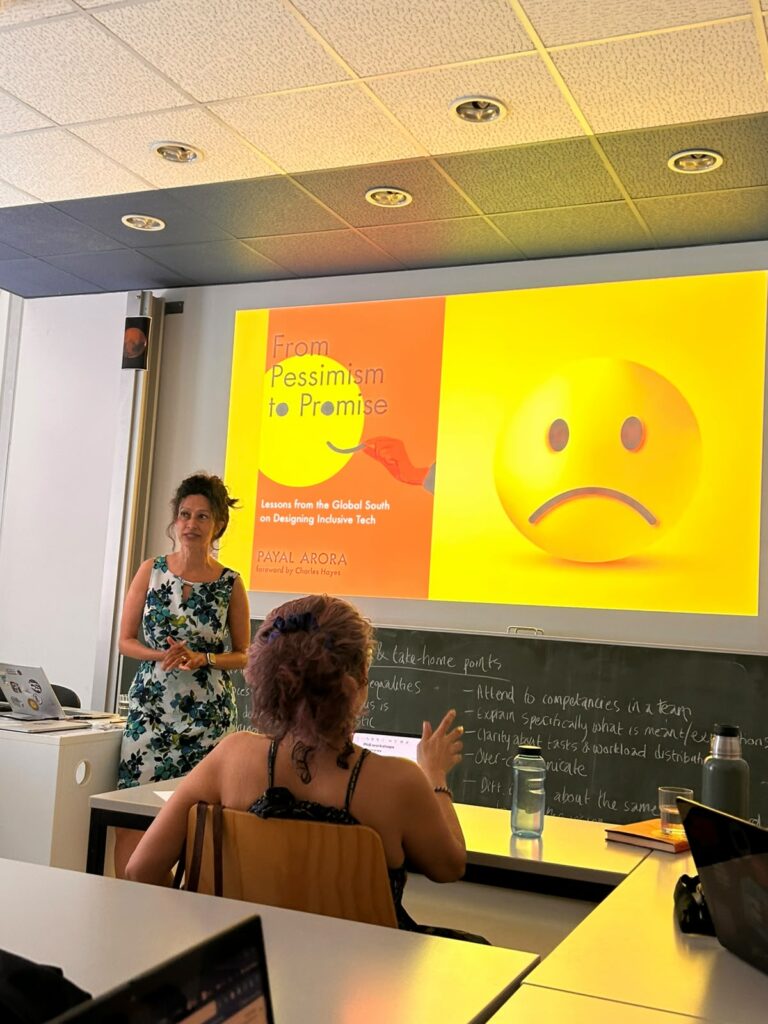
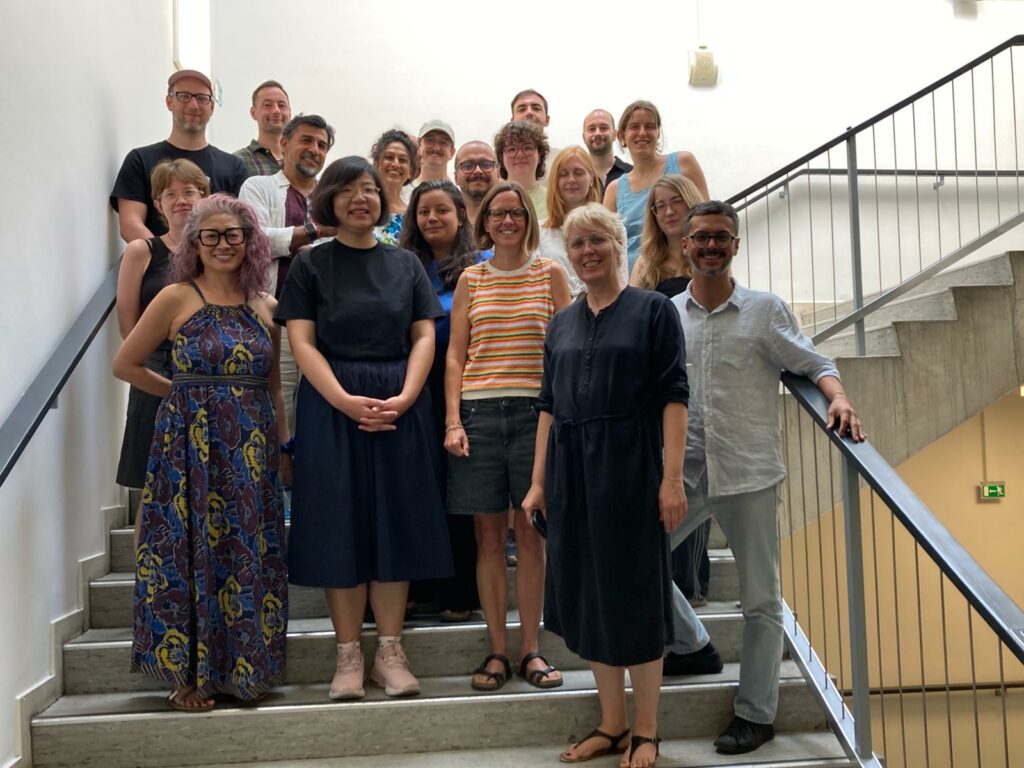
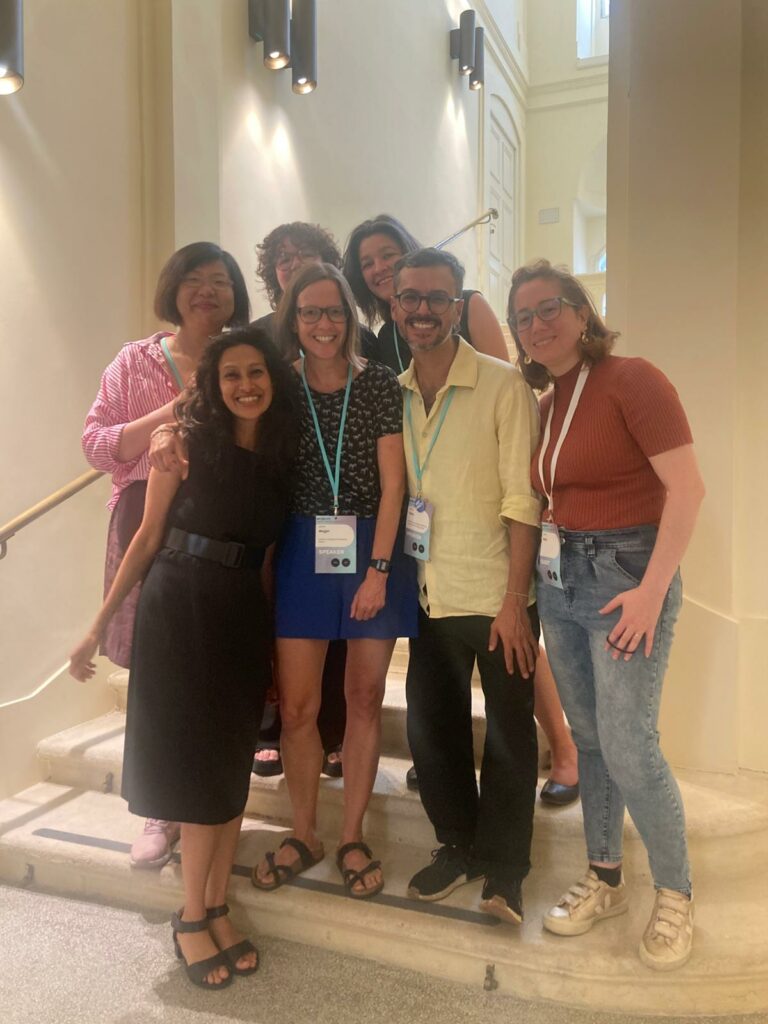
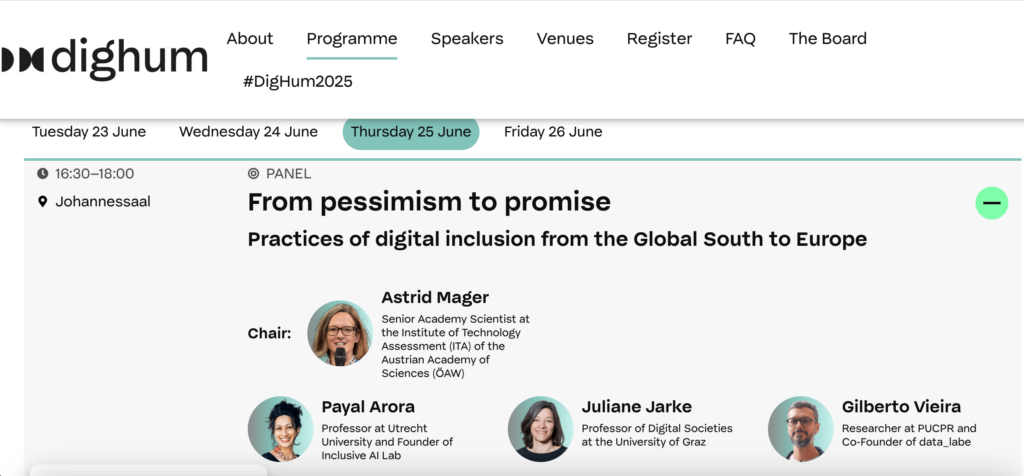
Thanks to all our contributors to the Digital Humanism session From Pessimism to Promise and the PhD workshop at the STS Department! And Katja Mayer, of course! The past days were really inspiring and thought provoking!! Let’s keep up the hopeful spirit! 🙂
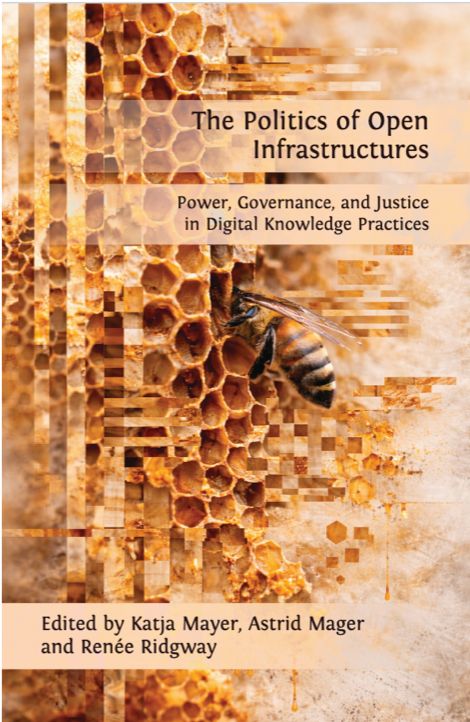
Now that our authors have started to share the news, I also quickly want to say how happy I am that our book “The Politics of Open Infrastructures. Power, Governance, and Justice in Digital Knowledge Practices” is finally out!!! It’s an edited volume put together by Katja Mayer, Renée Ridgway and me that collects theoretical contributions and in-depth empirical case studies on open digital knowledge infrastructures from different countries and contexts! This rich compilation of cases shows the fragility of open infrastructures within the larger corporate digital ecosystem, but also outlines pathways towards more open, participatory, and just digital infrastructures.
A huge thank you to Open Book Publishers for the swift publication process and support throughout! And, most importantly, A BIG THANK YOU to all our wonderful authors for their excellent contributions! – ranging from open internet standards, government data infrastructures, citizen science, community networks, practices of care & repair, to the future of infrastructuring openness:
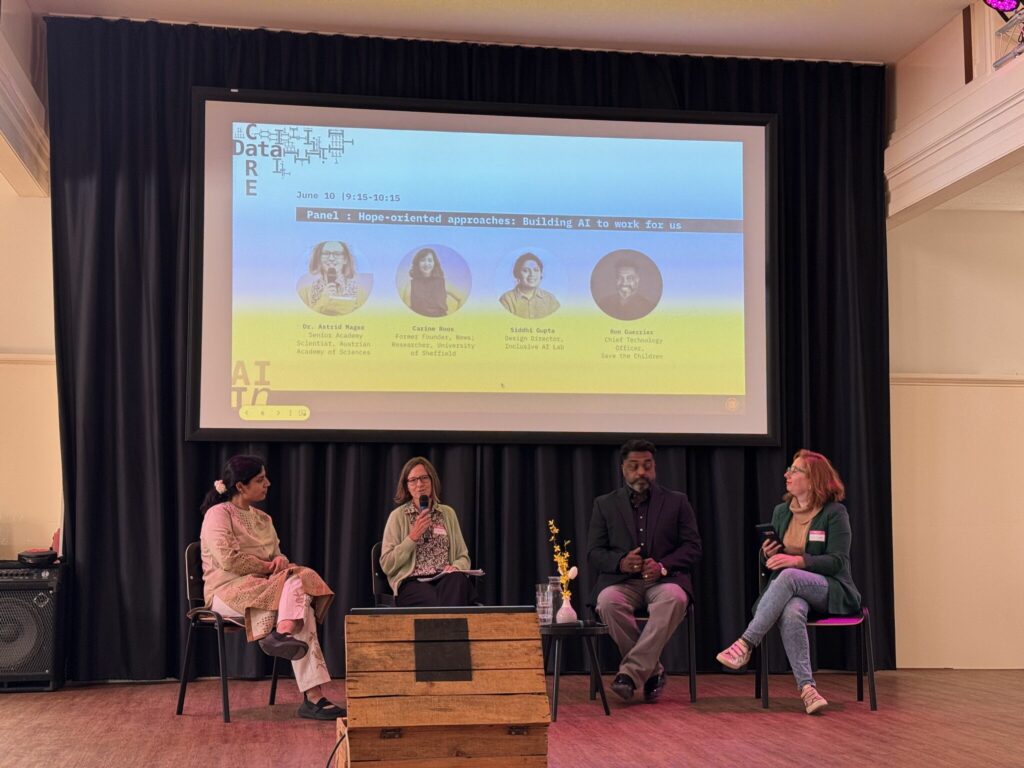
Last week, we had a great gathering organized by the fabulous Inclusive AI Lab, led by Payal Arora. The four-day event was part of the Data Care workshop series and had the motto – and aim – of Reclaiming Tech-Optimism. The Inclusive AI Lab, Utrecht University, follows the main purpose of opening up, diversifying, and reimagining AI together with the Majority world – which was reflected in the diverse set of speakers and audience – ranging from academic scholars, policy advisors, industry, to civil society from all over the world. The colorful exchange consisted of panel discussions, deep-dive workshops, field trips, and lots of interactive parts that made us get to know each other in ways we haven’t experienced so far (especially not in academic contexts) – such as introducing ourselves in ways we haven’t before, asking personal questions or staring in each others’ eyes for 2 (!) min without speaking, or talking to strangers on the street. Having been hesitant at first, I was ultimately surprised by the intimate connections we built and the hopeful vibes that were generated this way.
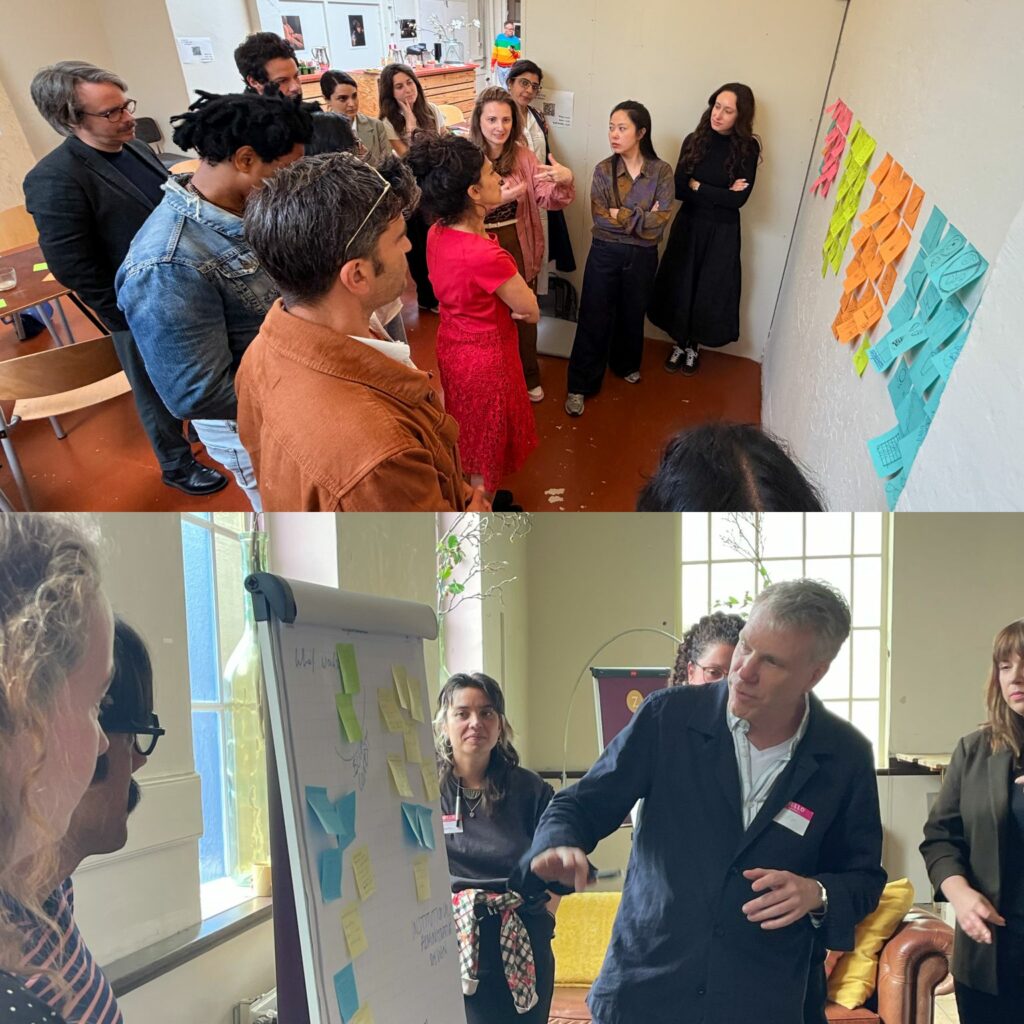
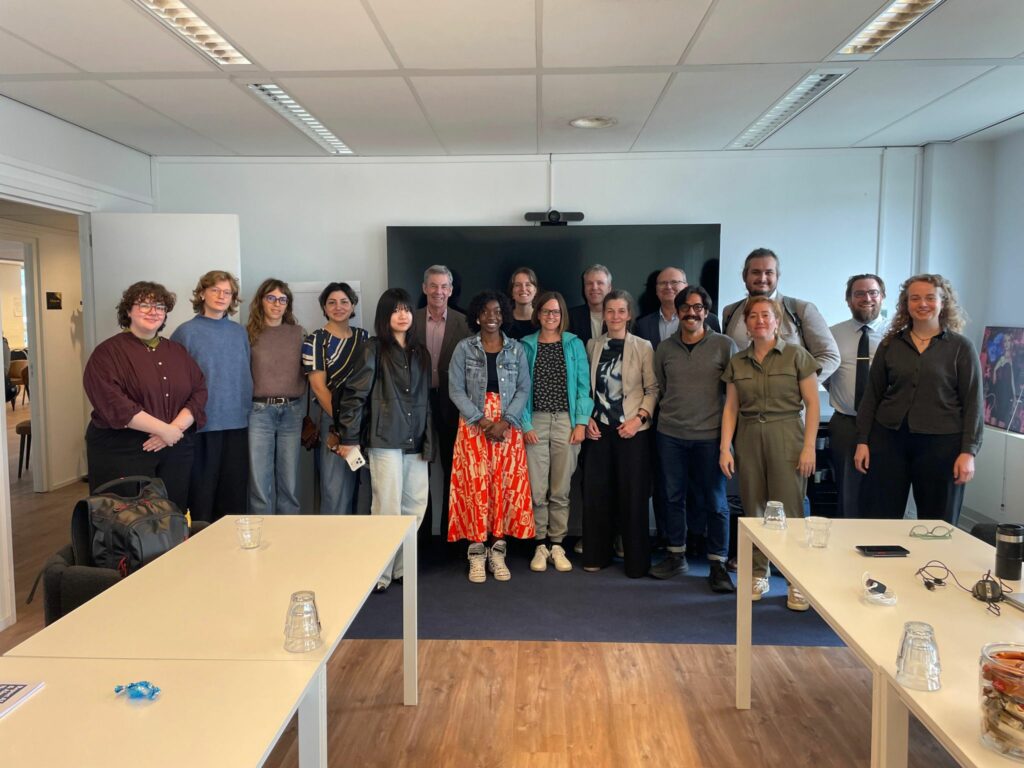
Together with Mirko Tobias Schäfer (Data School, Utrecht Univ.), and the support leads Rana Kuseyri and Constanze Kerres, I organized a workshop on “Situated AI Ethics: How to move from Values to Action” and a field trip to The Hague to visit the Data Protection Authority (DPA) and the Ministry of Labor and Social Affairs to talk about algorithmic systems in welfare states and how the Dutch Government responded to the Childcare Benefits Scandal more particularly (kindly supported by the ÖAW Commission Democracy in Digital Societies). The DPA’s professional and proactive take on algorithmic harm, risk mitigation, and human oversight gives me hope indeed! Two notions that particularly sticked with me were “institutional racism” and “institutional literacy”, which needs to be built on the very top of organizations rather than putting the burden on individuals such as citizens or civil servants. We’re currently collecting and organizing our ideas and planning to write a commentary or opinion piece based on the rich discussions we had – ideally together with some of the workshop participants and their wonderful examples of hopeful AI from different countries, cultures, and institutional contexts.
The spirit of hope – From Pessimism to Promise – will also guide our discussions next week that will take place as part of the Digital Humanism Conference in Vienna. First, Katja Mayer and I have organized a PhD workshop at the STS Department to discuss “Alternative Imaginaries of Social Digital Innovation from the Global South to Europe” together with Payal Arora and Gilberto Vieira from data_labe (Rio de Janeiro), as well as PhD students working on AI, policy, and human oversight in different institutional contexts. Second, we’ve organized a panel discussion with Payal, Gilberto, and Juliane Jarke to discuss how to reimagine and rebuild more inclusive digital futures – in Europe and the Global South(s).
I’m already looking forward to exciting days ahead!
This year, Doris Allhutter and I conducted a future scenario workshop at the Ars Electronica Festival focusing on datafication & future cities – as part of the Auto-Welf project we’re currently working on. One case study is focusing on practices & politics of open/ing government data for creating public value (including a digital twin project from Vienna). Stay tuned!
Central questions of the workshop were:
How do we envision future urban living? What data should be made available to serve all citizens equally? How should data support urban life and promote the well-being and opportunities of different people and communities? Designing postcards from the future, workshop participants created visions of the urban life we dream of – corresponding to the theme of the festival: HOPE – who will turn the tide.
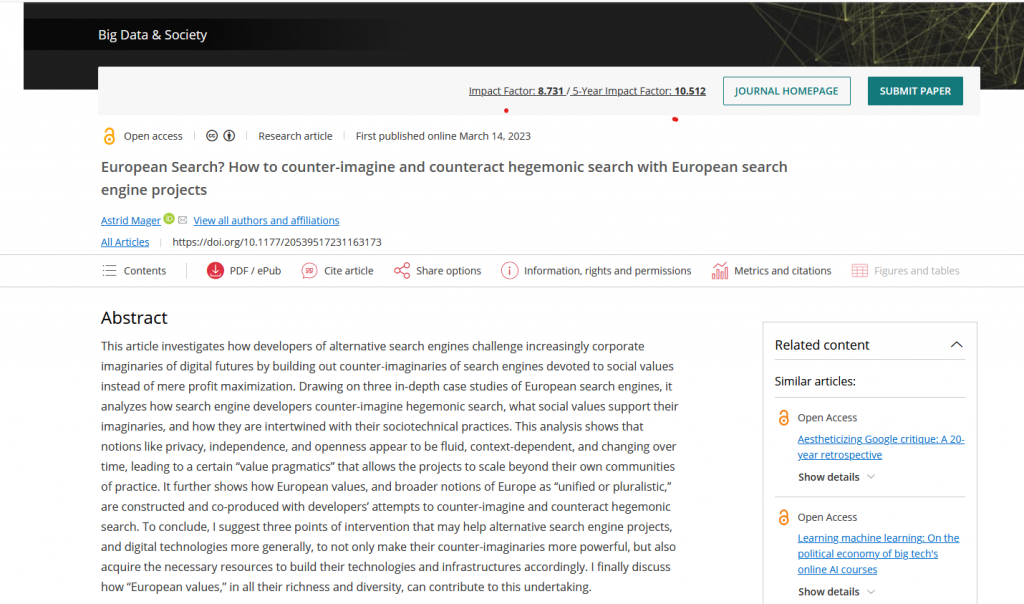
I’m very happy that my BD&S special issue article is online now! 🙂 It’s called “European Search? How to counter-imagine and counteract hegemonic search with European search engine projects” – it was a bit of a tough nut since critiquing big tech and their sociotechnical imaginaries appears to be much easier than thinking about (and realizing!) alternative technologies and their counter-imaginaries. And that’s exactly why we need to shift our attention from dominant, often corporate imaginaries towards alternative tech and their counter-imaginaries of digital futures – especially in the European context where notions of value-based Europe are strongly pushed in EU policy rhetoric, but remain empty catchphrases often times. To sum up, I’m proud that this article is out now & I would love to hear what you guys think about it!!
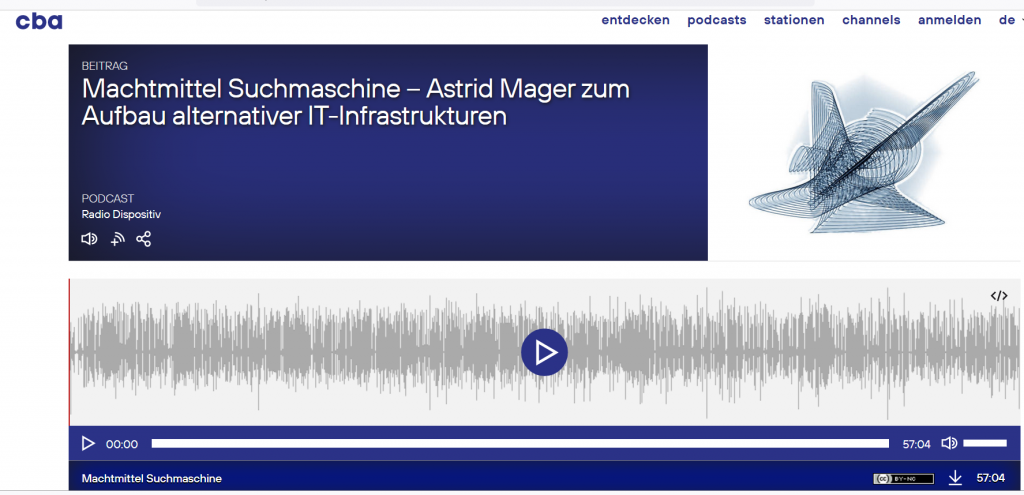
Im Oktober habe ich mal wieder mit Herbert Gnauer über Suchmaschinen diskutiert (Radio Dispositiv auf Orange, 94.0). Genauer über alternative Suchmaschinen, sowie den Aufbau offener – öffentlich finanzierter – IT Infrastrukturen. Ein offener Web Index könnte die Grundlage für die Entwicklung von ganz unterschiedlichen Suchmaschinen, Ranking-Instrumenten, und Applikationen sein. Er könnte dem gegenwärtigen Monopolisten (Google) eine reichhaltige, buntere, diversere Suchmaschinenlandschaft entgegensetzen. Diese würde wesentlich besser zu unseren “europäischen Werten” – und hier insbesondere dem pluralen, multikulturellen, und diversen Europa – passen, als hegemoniale Ansprüche ein “europäisches Google” zu bauen, dem Europa kaum gerecht werden kann – alleine schon deshalb, weil Europa ganz anders funktioniert als die USA (und China) – Stichwort Datenschutz, aber auch kulturelle Eigenheiten, verschiedene Sprachen, fragmentierte Märkte etc, die es positiv nutzbar zu machen gilt! Ein offener Web Index – wie übrigens auch das dezentrale social network Mastodon – halten daher nicht nur alternative, verteilte, nachhaltigere Technologien für uns bereit, sondern auch alternative Imaginationen von Europa, die es weiter zu verfolgen gilt.
Zwei Initiativen machen sich hier insbesondere starkt: Die Open Web Index Initiative und die Open Search Foundation, die beide den Aufbau einens offenen Web Indexes anstreben. Es lohnt sich diese großartigen Projekte im Detail unter die Lupe zu nehmen!
Vielen Dank Herbert, dass Du diesen Ideen Raum in Deiner Sendung geboten hast! Es ist mir immer wieder eine Freude! Spoiler: zwei wiss. Artikel dazu sind gerade im Erscheinen (Big Data & Society) & in Begutachtung (book Project Europe) – more info coming soon!
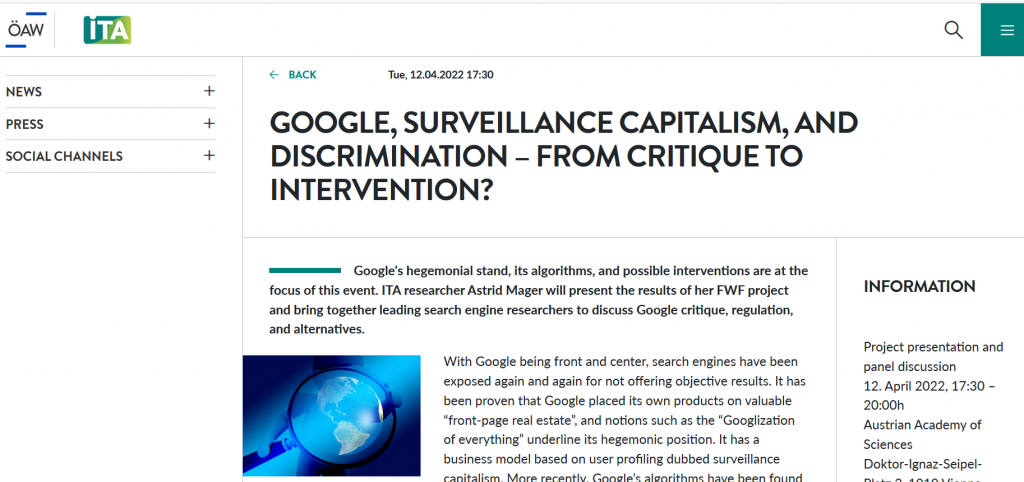
On the 12th of April we’ll host a big event at the newly renovated Austrian Academy of Sciences. I’ll first present the results of my long-standing habilitation project “Algorithmic Imaginaries” (funded by the Austrian Science Fund; Elise Richter Program), followed by a panel discussion with leading search engine scholars from all over Europe. Together with Elizabeth Van Couvering, Rosie Graham, and Bernhard Rieder we’ll discuss Google, surveillance capitalism, and discrimination; moderated by Ov Cristian Norocel and Richard Rogers. All infos and registration on-site can be found here; there’ll be a stream too!
Before the public event we’ll be holding a writing workshop at the Institute of Technology Assessment to discuss the manuscripts for our special issue “From Google Critique to Intervention” to be published by Big Data & Society. I’m already looking forward to this get-together!! The video of the event can be found here.
If you’d like to learn more about my project “Algorithmic Imaginaries” you might watch this video of the lecture I gave in Feburary as part of the ÖAW’s gender & diversity lecture series (in German). This lecture sparked quite some media attention including a cover in Der Standard’s “Forschung Spezial” 🙂
Finally, our report of the project on the so-called AMS-algorithm is out!!! YAY!!! It was a lot of work, but it was definitely worth it! It is an in-depth sociotechnical analysis and deconstruction of the algorithm the Austrian public employment service (AMS) is planning to roll out all over Austria starting from January 2021. The algorithm poses several severe challenges on both the institutional level and the larger societal level, as we – Doris Allhutter, Florian Cech, Fabian Fischer and Gabriel Grill – argued in our report. We’d like to thank the Upper Austrian Chamber of Labor (AK OÖ) that financed our study and particularly Dennis Tamesberger for his support throught the process. Here you can download the full report.
The report triggered lots of media coverage, e.g. in APA Science or at orf.at. We also did some interviews, e.g. for the Austrian Academy of Sciences, Futurezone or the radio broadcast Ö1 (all in German). The final report is in German, but english publications will (hopefully) follow SOON! For now I’d like to point you to the english publications in New Frontiers in Big Data that we published a year ago (only based on publicly available materials back then, but still relevant in its argumentation):
Allhutter, D., Cech, F., Fischer, F., Grill, G. & Mager, A. (2020) “Algorithmic Profiling of Job Seekers in Austria: How Austerity Politics Are Made Effective”, Frontiers in Big Data (Special Issue Critical Data and Algorithm Studies), full text; open access here.
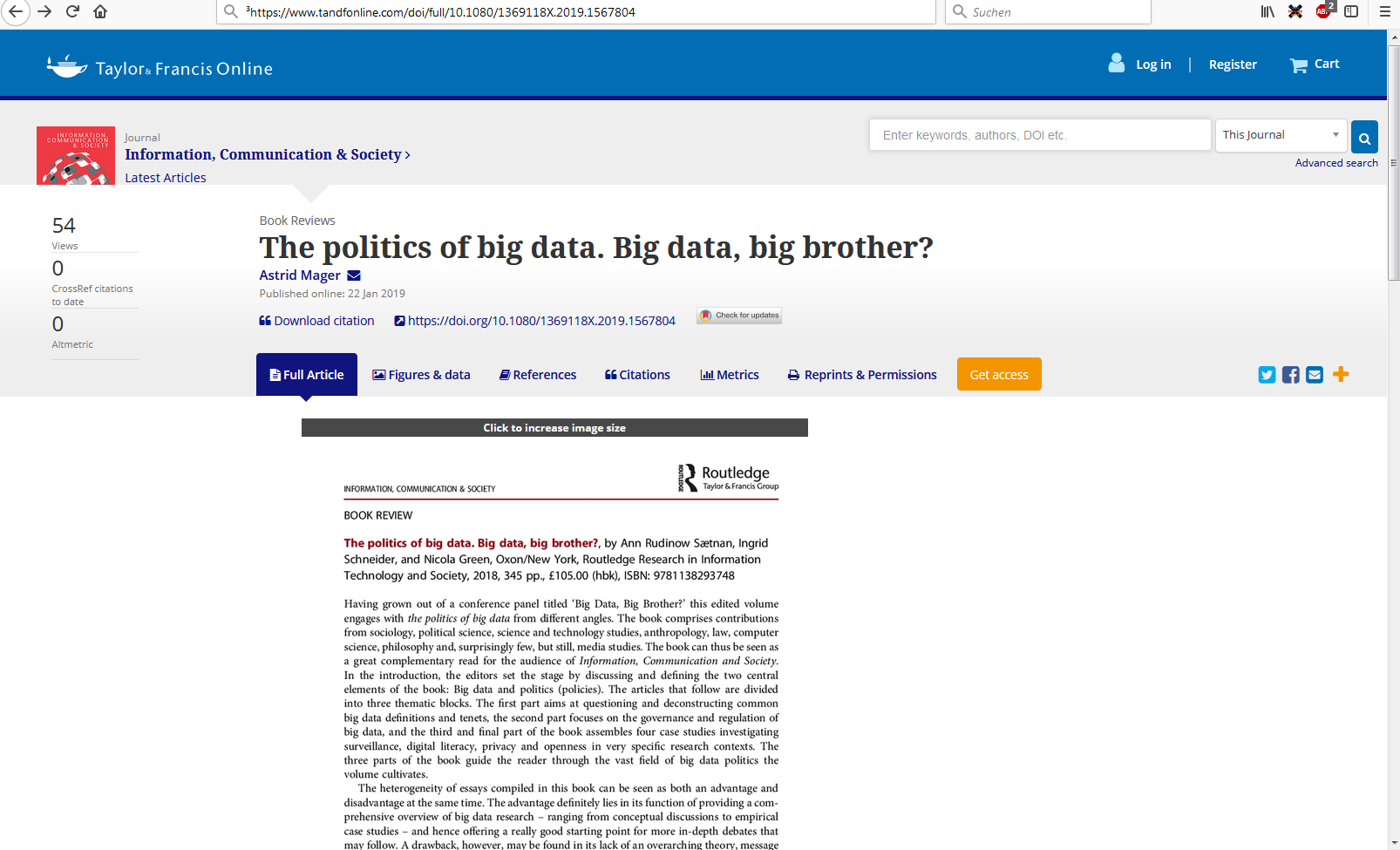
Here’s my book review of The Politics of Big Data. Big Data, Big Brother? by Ann Rudinow Sætnan, Ingrid Schneider, and Nicola Green for the journal Information, Communication & Society. It’s a great compliation of articles dealing with the politics and policies of big data in different contexts!
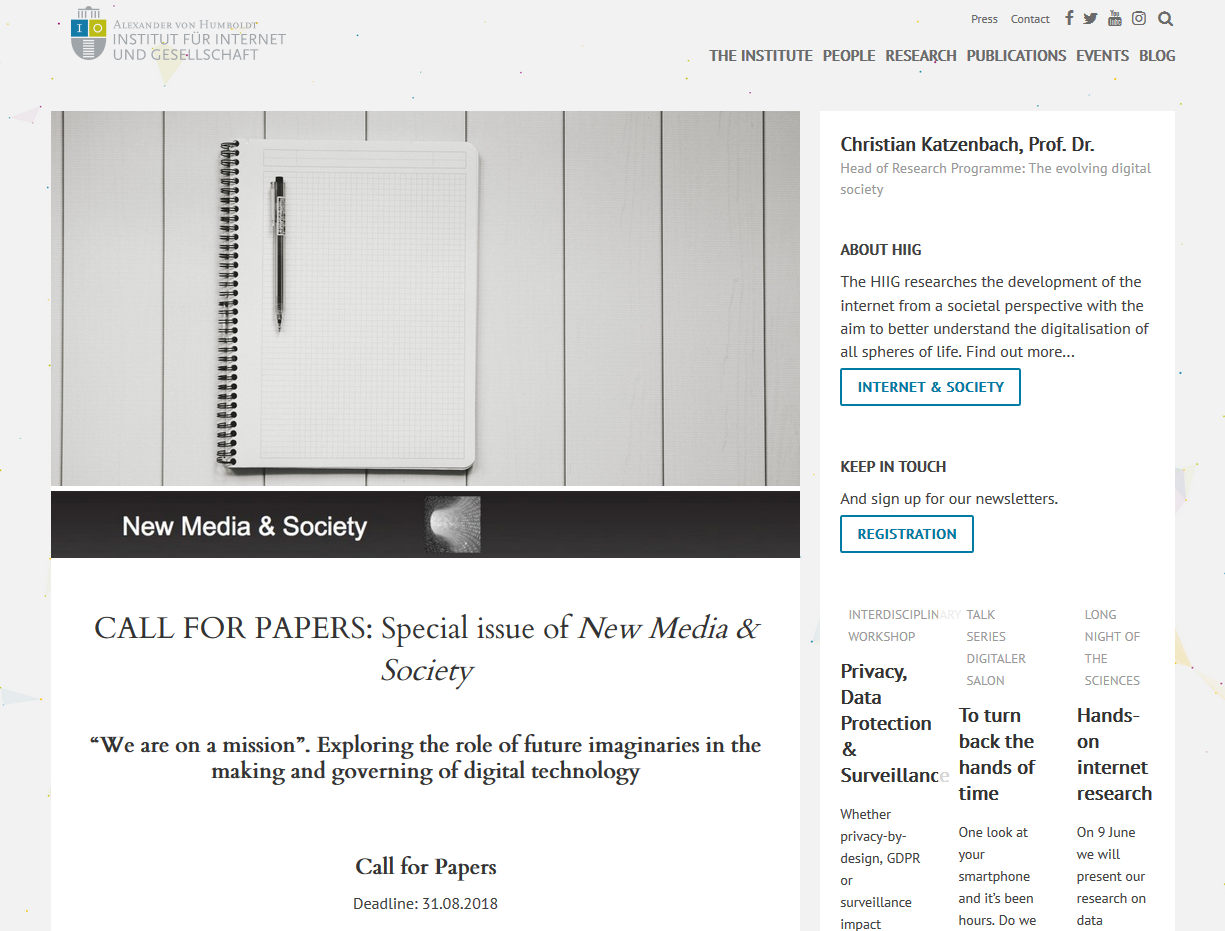
This is the CfP for the special issue in New Media & Society I guest-edit together with Christian Katzenbach: “We are on a mission”. Exploring the role of future imaginaries in the making and governing of digital technology. All relevant information can be found here:
We’re already looking forward to your submissions!